



ADHD & Productivity: Why Simple Systems Win
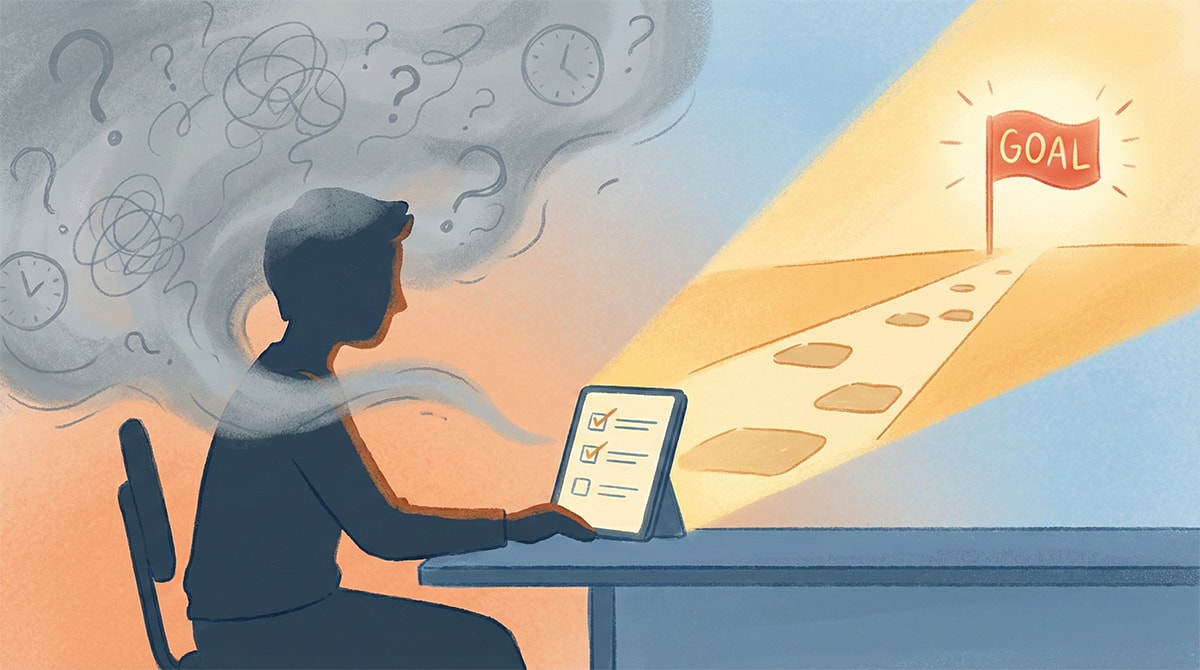
If you’ve ever opened a to-do list app, spent 45 minutes color-coding your tasks, and then done absolutely none of them, you’re not broken. You might just have ADHD.
Living with ADHD in a world built for neurotypical productivity is like trying to run a race in shoes designed for someone else’s feet. The traditional advice — “just make a schedule,” “use a planner,” “set reminders” — often fails because it assumes a brain that responds to those cues; the ADHD brain doesn’t. It responds to interest, urgency, challenge, and novelty. And understanding that is where real productivity begins.
The good news? When you stop fighting your brain and start building systems that work with it, everything changes. And the secret most productivity gurus miss is this: simpler is almost always better.
Why the ADHD Brain Struggles with Traditional Productivity Systems
Before we get into solutions, it helps to understand the “why.” ADHD isn’t a lack of willpower — it’s a neurological difference in how the brain’s executive function and dopamine regulation systems work.
Here’s what that actually means day-to-day:
- Working memory challenges make it hard to hold tasks in mind, follow multi-step instructions, or remember what you were doing five minutes ago.
- Time blindness is the sense that the future isn’t real. Deadlines only become motivating when they’re right now.
- Dopamine dysregulation means the brain struggles to generate motivation for tasks that aren’t immediately rewarding, regardless of their importance.
- Task initiation difficulty is the frustrating gap between knowing you need to do something and actually starting it.
- Hyperfocus can be a superpower or a trap; you might spend four hours perfecting one task while ten others pile up.
Complex productivity systems collapse under these conditions. A 47-step morning routine, a seven-tab spreadsheet planner, or an elaborate project management tool becomes its own source of overwhelm. When the system requires more executive function than the task itself, the system loses.
The Golden Rule: Reduce Friction at Every Step
The most effective productivity principle for ADHD is this: the easier something is to start, the more likely you are to do it.
Every extra click, every blank field, every decision point is friction, and friction kills follow-through. This is why simple systems win. A sticky note on your monitor will often outperform a sophisticated app if that app requires over-categorization, filling out twenty fields, and navigating a complex system.
Design your environment and your systems to make the right action the path of least resistance.
7 Evidence-Based Strategies for ADHD Productivity
1. Work With Your Interest, Not Against It
The ADHD brain operates on the “interest-based nervous system,” a term coined by psychiatrist Dr. William Dodson. If a task isn’t interesting, urgent, challenging, or tied to a relationship, starting it feels almost impossible.
What to do:
- Gamify your tasks. Track streaks, earn points, compete with your past self.
- Add novelty: change your environment, use a new playlist, work in a coffee shop.
- Attach boring tasks to things you enjoy (a favorite podcast while doing admin work).
- Use accountability partners or body doubling. Working alongside someone else, even virtually, can dramatically improve focus.
GoalChamp can help here. GoalChamp’s goal-tracking and achievement system is built around motivating users by making their progress visible. Seeing your streaks and completions activates the exact kind of reward-seeking that ADHD brains crave. Instead of a flat to-do list, your progress becomes something you can see, and that visual feedback loop matters more than most people realize.
2. Break Goals Down — Smaller Than You Think
“Work on the report” is not a task. It’s a vague intention that your brain will happily ignore. Tasks need to be concrete, specific, and small enough that starting them takes less than two minutes of mental setup.
What to do:
- Break any goal into its smallest possible first action. Not “write the proposal” — “open a new document and write one sentence.”
- Ask yourself: What is the very next physical action? (A concept from David Allen’s GTD methodology)
- Don’t plan more than 3 major tasks per day. Overloaded lists are demoralizing.
GoalChamp is designed for exactly this. You can break goals down into actionable milestones and track them incrementally, which keeps the momentum going and makes large projects feel manageable rather than paralyzing.
3. Use Time-Boxing Instead of Open-Ended Work Sessions
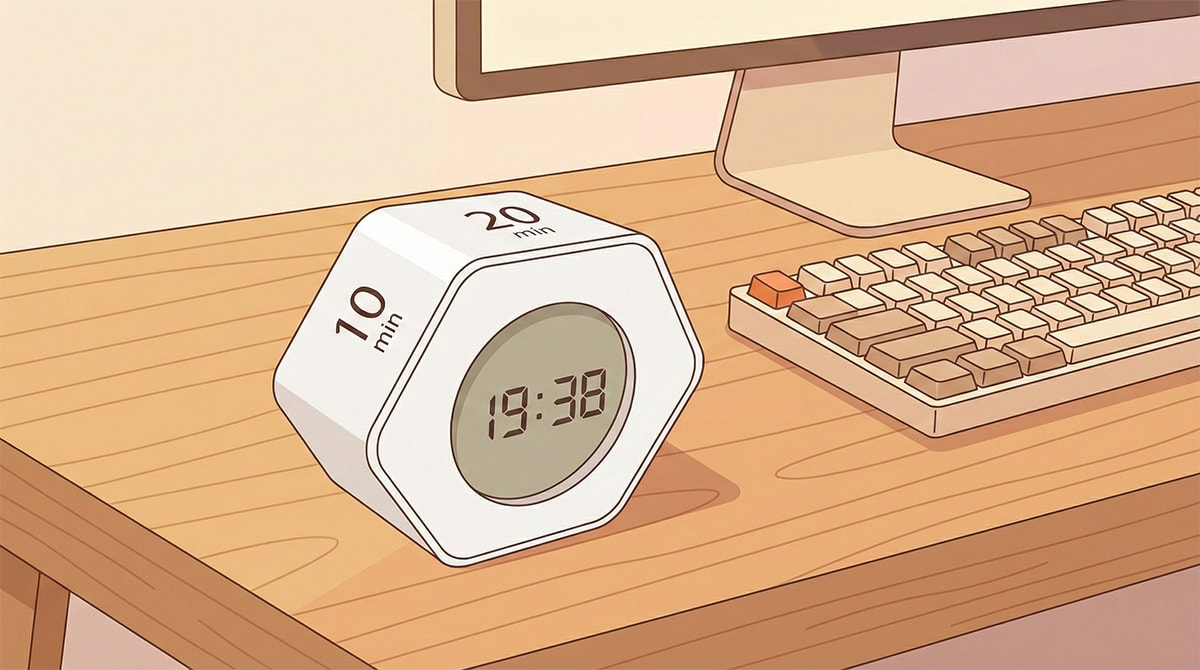
Open-ended time is the enemy of ADHD focus. Without a boundary, tasks expand, distractions multiply, and hyperfocus can consume entire afternoons. Structured time blocks create the urgency your brain needs.
What to do:
- Try the Pomodoro Technique: 25 minutes of focused work followed by a 5-minute break. (Adjust ratios to fit your brain; some ADHD folks do better with 15/5 or 45/15.)
- Use a visible timer. The Pomodoro app, Time Timer, or even a physical kitchen timer all work well.
- Schedule specific tasks to specific slots. “9–9:25 AM: draft email responses.” Not just “do emails.”
Recommended tools: Physical pomodoro timer, iPhone Clock’s Stopwatch, Forest (gamified focus timer), or the Toggl Track app for time awareness.
4. Externalize Everything
The ADHD working memory is unreliable. If it’s only in your head, it’s as good as lost. Consistently externalize your thoughts, commitments, and plans in the physical or digital world.
What to do:
- Keep a single capture inbox (a notepad, voice memo app, or quick-add in your task manager) so ideas never get lost.
- Write tasks down the moment they occur to you.
- Use a whiteboard or sticky notes in your physical space for today’s priorities (visible reminders beat invisible digital ones).
- Do a weekly review to process your inbox and set priorities.
GoalChamp serves as that external brain for your goals. Rather than keeping aspirations vaguely “in your head,” you log, track, and review them in one place. This transforms intention into structure.
5. Leverage Accountability Systems
Accountability is rocket fuel for ADHD productivity. When someone else knows what you’re working on, the urgency your brain needs suddenly appears.
What to do:
- Share your goals publicly or with a trusted person.
- Use body doubling: work alongside someone, in person or virtually (Focusmate.com is excellent for this).
- Join an ADHD accountability community or coaching program.
- Set commitments with real (even small) stakes.
6. Simplify Your Environment Ruthlessly
Your environment shapes your behavior more than your willpower does. A cluttered desk, ten open browser tabs, and a phone buzzing with notifications is an ADHD ambush.
What to do:
- Use website blockers during focus time (Freedom, Cold Turkey, or the built-in Screen Time/Focus Mode on your phone).
- Keep your workspace as clean and minimal as possible.
- Set up “launch pads”: everything you need for a task, ready to go before you sit down.
- Use headphones and ambient noise (brown noise, lo-fi music, or apps like Brain.fm) to reduce auditory distractions.
7. Celebrate Progress, Not Just Completion
ADHD brains are often wired for all-or-nothing thinking. You either nailed it or failed it. This makes it easy to discount genuine progress and abandon goals that are 70% done. Building in positive reinforcement along the way sustains momentum.
What to do:
- Celebrate milestones, not just endpoints.
- Track your “done” list, not just your to-do list. Looking back at what you accomplished is motivating.
- Reward yourself after completing difficult tasks; even small rewards matter.
GoalChamp is built around this philosophy. Its achievement and progress-tracking system reinforces the journey, not just the destination. For ADHD brains that struggle with delayed gratification, that immediate recognition of progress is genuinely powerful.
Building Your Simple System: A Starting Point
You don’t need a perfect system. You need a working one. Here’s a minimal starting framework:
Morning (5–10 minutes):
- Open GoalChamp and review your active goals and today’s milestones.
- Choose your 1–3 most important tasks for the day.
- Store them in the app (optionally write them on a sticky note or whiteboard where you can see them).
During the day:
- Use time-boxed work sessions (Pomodoro or similar).
- Capture any new tasks or ideas immediately so they’re off your mind.
- Check off completions as you go; the micro-dopamine hit is real.
Evening (5 minutes):
- Mark your progress in GoalChamp.
- Do a quick brain dump of anything unfinished or on your mind.
- Set one intention for tomorrow.
That’s it. Simple enough to sustain, structured enough to work.
A Note on ADHD Medication and Professional Support
No productivity system replaces appropriate medical care. If you haven’t already, it’s worth speaking with a psychiatrist or ADHD specialist about whether medication might be right for you. For many people, medication significantly improves the effectiveness of every other strategy on this list. ADHD coaching is also an increasingly recognized and effective support, helping individuals build personalized systems with professional guidance.
Resources & Further Reading
Here are trusted, research-backed resources to go deeper:
- CHADD (Children and Adults with ADHD) — the leading ADHD advocacy and information organization: chadd.org
- ADDitude Magazine — practical advice written by and for the ADHD community: additudemag.com
- Dr. Russell Barkley on ADHD — one of the world’s foremost ADHD researchers, with extensive free video content: russellbarkley.org
- “ADHD 2.0” by Dr. Edward Hallowell & Dr. John Ratey — an essential book updating ADHD understanding for modern life
- “Smart but Stuck” by Thomas E. Brown — explores executive function challenges with ADHD
- Focusmate (body doubling tool): focusmate.com
- GoalChamp (goal tracking designed for real follow-through): goalchamp.com
- Understood.org — science-based resources for learning and thinking differences: understood.org
Your ADHD brain isn’t a liability; it’s a different operating system. The right tools and the right systems don’t change who you are. They just finally give you room to show what you’re capable of.
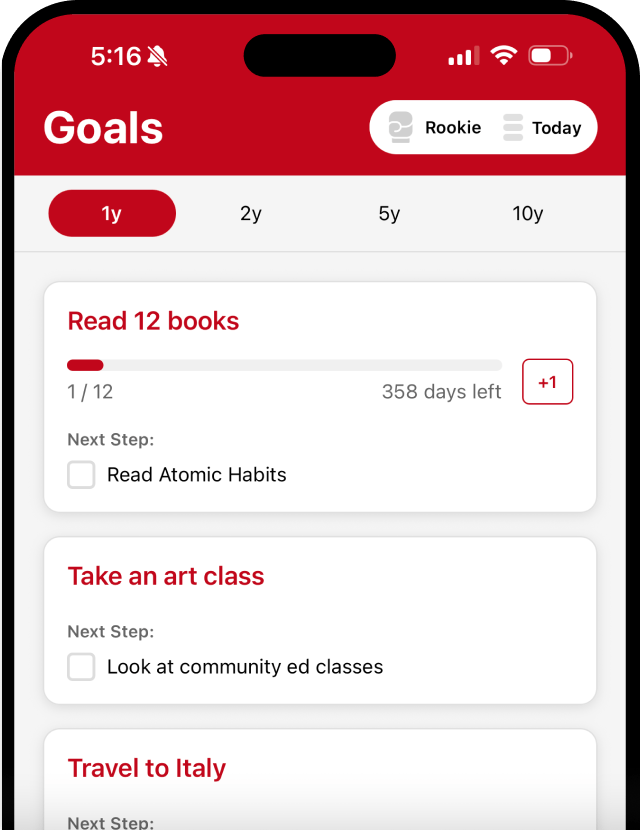
Try out our free Goal Tracking app!
It'll help you set effective goals, update your next step toward achievement, and track your progress. Learn More >