



Zero to One by Peter Thiel
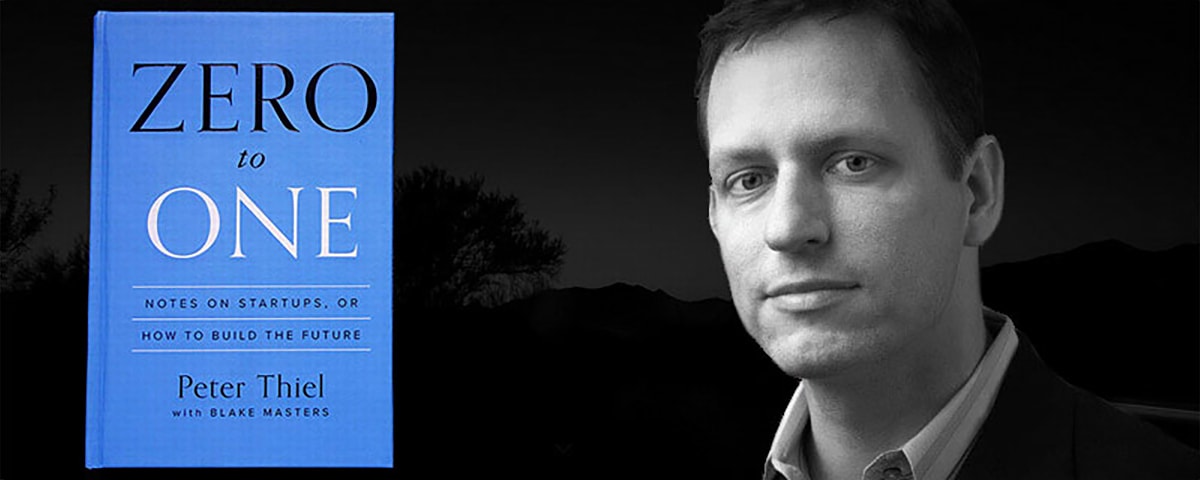
Zero to One by Peter Thiel is an interesting look at how large companies are built. If you’re not familiar with Mr. Thiel, he was a founder of PayPal, which eventually sold to eBay for $1.5 billion. Later, he made the first outside investment in Facebook of $500,000 and joined its board. After that, Thiel created Founders Fund, a venture capital fund with investments in Airbnb, Spotify, and Lyft. He’s also the founder of Palantir Technologies, which analyzes large datasets for customers such as the US government. Thiel writes from experience about how startups can successfully go from inception to market dominance.
“Every moment in business happens only once. The next Bill Gates will not build an operating system. The next Larry Page or Sergey Brin won’t make a search engine. And the next Mark Zuckerberg won’t create a social network. If you are copying these guys, you aren’t learning from them.”
Contrarian Thinking
The most interesting points in Zero to One are those that challenge conventional thinking (contrarian thinking). Peter Thiel challenges the prevailing view that competition is a good thing. His argument is that competition places the focus on one-upping the competition, rather than trying to make leaps in innovation.
He cites Microsoft and Google as companies that have released products focused on competing with each other rather than using that effort to innovate in spaces where they can control the market. This allowed Apple to carve out its own space and become more valuable than both companies.
Education System Issues
He argues that our educational system isn’t structured to help us build great companies. Instead, schools encourage students to learn very little about a wide variety of things to pass tests. In fact, they’re set up to fail people who might be extraordinary in a particular field and push everyone who passes into cookie-cutter jobs. He was on this path himself until he was turned down for a clerkship. This disruption ultimately led him to the entrepreneurial path, where he found success creating companies.
Creating Companies
The most common way to create a company is to identify a need in the market and make improvements on what is currently being offered (or just copy them and try to get some small market share). Thiel considers this a “zero to n” approach (simply increasing the number of offerings available).
The alternative approach that his book focuses on is a “zero to one” approach, starting from the ground up and creating something that doesn’t already exist. This allows the company to create a monopoly where they don’t have to focus on competition. When you think of a monopoly, you may picture some evil businessman plotting in his ivory tower, but Thiel’s contrarian view is that a monopoly is ultimately a good thing in business. He suggests it’s the only way to build a large, dominant, truly innovative company.
While most of the book covers Thiel’s view of the world and why businesses succeed, toward the end he discusses his approach to investing and offers some thoughts on creating a startup. He suggests starting a company focused on a small niche and then expanding to a broader customer base (e.g., PayPal starting with eBay Auctioneers). He lists seven questions that every business needs to answer:
- Can you create breakthrough technology instead of incremental improvements?
- Is now the right time to start your particular business?
- Are you starting with a big share of a small market?
- Do you have the right team?
- Do you have a way to not just create but deliver your product?
- Will your market position be defensible 10 and 20 years into the future?
- Have you identified a unique opportunity that others don’t see?
Overall, this book had some helpful insights and some thought-provoking ideas. It’s not exactly a step-by-step guide to creating a company, but rather a view into Peter Thiel’s philosophy, experience, and the commonalities that he has discovered working with a string of successful companies.
Zero to One: Notes on Startups, or How to Build the Future
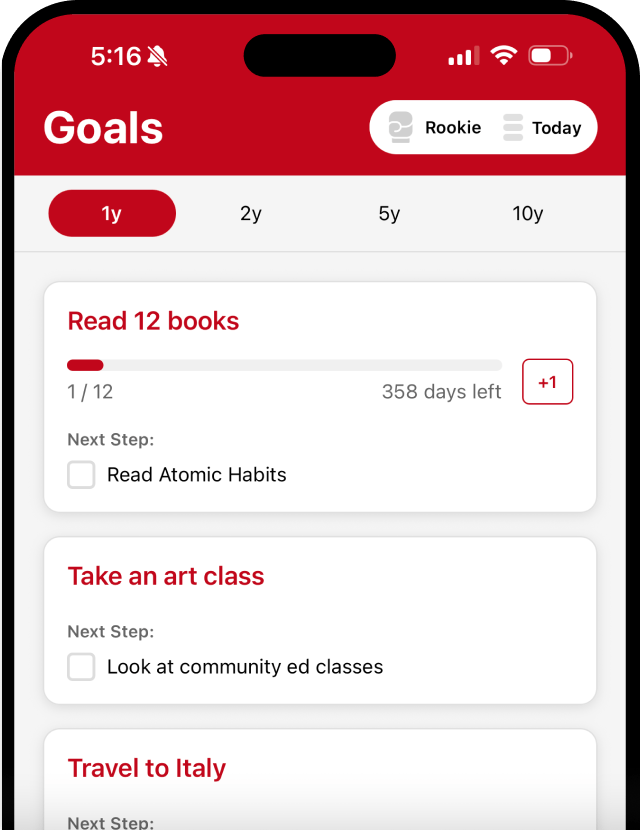
Try out our free Goal Tracking app!
It'll help you set effective goals, update your next step toward achievement, and track your progress. Learn More >